The voice that thinks it knows best
Understanding your inner critic can begin with an odd question: would you take relationship advice from a 12-year-old? Probably not. Yet according to my guest Rónán Johnston, many of us are letting a much younger version of ourselves have a remarkable say in our adult lives.
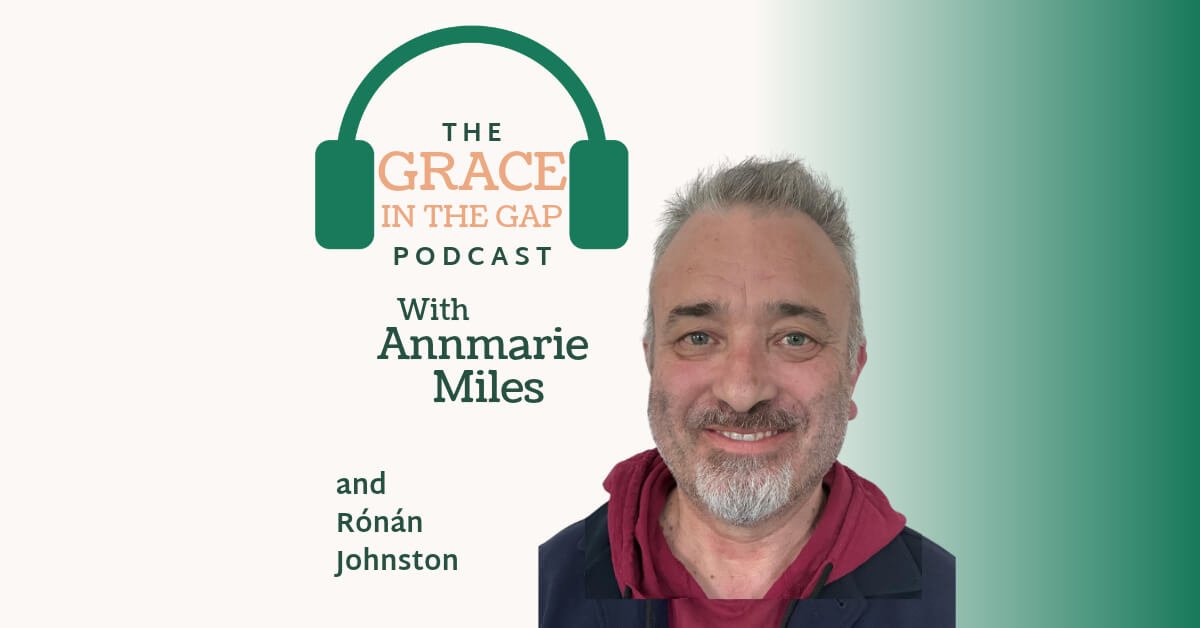
That was one of the moments in our conversation that really stayed with me. Rónán is a musician, songwriter and broadcaster who has spent the past twelve years working as a psychotherapist. I've known him for years, so I knew we'd have a good chat. I wasn't expecting to come away thinking quite so much about the bossy child in my head.
How an old belief becomes an inner critic
Rónán explained an idea from schema therapy: when we're young, we develop ways of understanding ourselves and the world that help us cope. Some of those conclusions can be harsh and remarkably resistant to change.
He described a child around the end of primary school age trying to protect a younger, more vulnerable part of themselves. That child looks around, decides what it takes to survive and forms a set of rules. The trouble is, a 12-year-old's understanding of life isn't especially nuanced.
One of the beliefs Rónán sees often in his work is the sense that there's something wrong with us — even if we can't quite explain what it is. So we watch ourselves closely, try not to make mistakes and become our own fiercest critics.
Rónán asked whether we'd listen if a 12-year-old wandered over in a café and began offering advice about our relationships. We'd probably thank them politely and carry on. Yet that same voice can have us second-guessing ourselves for years.
When being harder on yourself makes things harder
I told Rónán how much I regretted the way I'd treated myself as a teenager. I could put on a good show of confidence, but I had very little patience or compassion for myself.
We talked about the strange idea that if we criticise ourselves a bit more, we'll finally improve. I've tried that approach for years. Rónán described how fear and stress can keep us returning to familiar coping habits, even when those habits aren't helping us.
He also talked about our needs for belonging, connection, achievement, freedom and fun. When those needs go unmet, we may look for relief in ways that don't serve us particularly well. It gave me another way of thinking about the behaviours we can be so quick to condemn in ourselves.
A diagnosis that made sense of the past
Rónán shared that he'd received an ADHD diagnosis in his early sixties. Other people in his life seemed less surprised than he was!
He described how the diagnosis helped him make sense of his tendency to chase stimulation and revisit embarrassing moments from years ago. It also gave him an opportunity to look back at his younger self with a little more understanding.
I liked the way he described being able to say, in effect, ‘No wonder.’ Not an excuse for every choice, but a gentler and more accurate way of understanding why some things had been difficult.
Twenty-seven platinum discs under a table
And then came the story that nearly knocked me off my chair.
Rónán has worked on an extraordinary amount of music, including projects connected with major pop acts. Over the years, he accumulated around 27 platinum discs. Where did he keep them? In a pile under a table.
His wife Joanne eventually insisted he put them on the wall. I was astonished. Twenty-seven platinum discs! But the story made perfect sense alongside what we'd been discussing. For someone who struggles to believe in their own worth, even a huge achievement can feel briefly satisfying before the inner critic starts demanding the next one.
Joanne wasn't asking him to show off. She wanted him to acknowledge what he'd done. I thought that was wonderful. Most of us don't have a wall of platinum discs waiting to be hung, but we may have achievements, acts of courage or hard-won progress that we've brushed aside far too quickly.
Faith, therapy and the work of healing
We also talked about how psychotherapy and Christian faith have shaped Rónán's understanding of himself. He raised a question that many believers may recognise: how can we believe God loves us while treating ourselves as the one person who somehow doesn't qualify?
Rónán spoke about the importance of doing emotional and psychological work rather than expecting a spiritual phrase to cover every wound. I shared how counselling had made me notice how often the Bible speaks about our thinking — renewing our minds, taking thoughts captive and paying attention to what we dwell on.
We agreed that what we believe about ourselves affects how we treat ourselves. That can be uncomfortable to examine, but it can also be the beginning of change.
What would you say to someone you love?
Before we finished, I asked Rónán what he'd say to someone frustrated by where they are in life. His answer came back to kindness. He suggested imagining the person you love most and asking whether you'd speak to them the way you speak to yourself. Would you hold that mistake against them? Would you offer them the same harsh advice?
It's a question worth sitting with. I know I can be far more generous to someone else than I am to myself. Rónán's picture of the 12-year-old inner critic has given me a way to notice when that old voice is trying to take charge again.
And the platinum discs? I hope they stay on the wall.
Listen to my conversation with Rónán Johnston on Grace in the Gap for more about the inner critic, faith, ADHD and learning to treat yourself with a bit more grace.
Thanks so much to Rónán for joining me on Grace in the Gap. Connect with him on Instagram.